
TCL VoxIN smart air conditioners: voice control that survives a dead internet
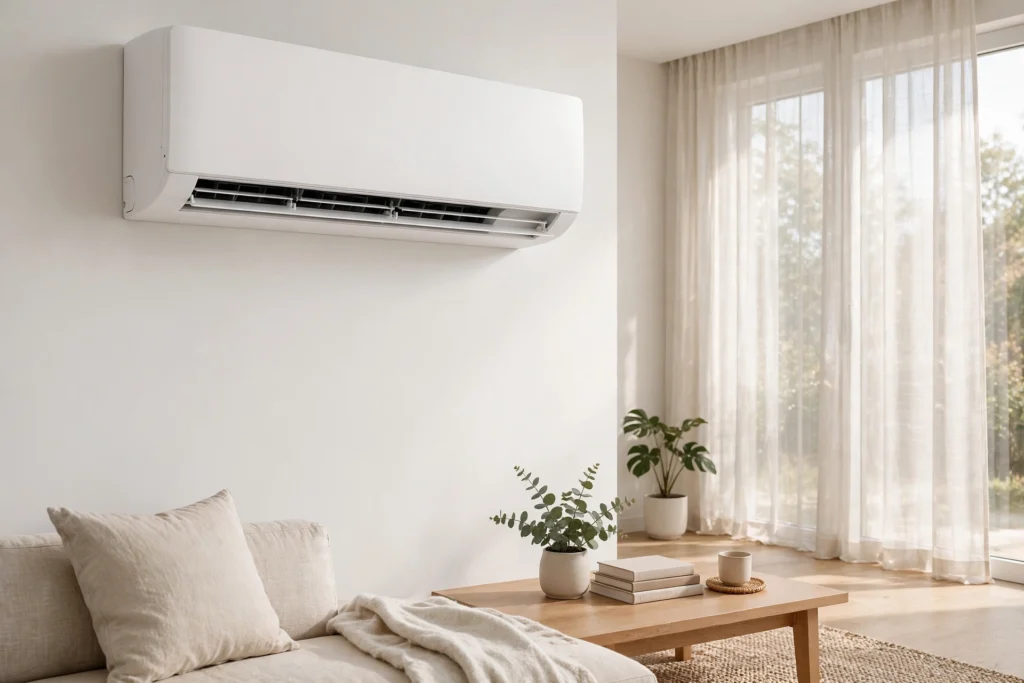
The TCL VoxIN smart air conditioners range arrived in Australia in September 2026, and it marks something of a pivot for a brand most Australians know from televisions. This is TCL’s first serious push into home comfort here — a four-model line of reverse-cycle split systems with a standout trick: voice control that keeps working even when your internet connection drops out. Prices start at $959 for the 2.6kW model, and the range is on sale in Australia now.
There is plenty of competition in the smart split-system market, from Daikin and Mitsubishi Electric through to budget names like Midea. But the TCL VoxIN smart air conditioners have landed with a spec sheet aimed squarely at how Australian households actually run their cooling — offline voice for the dead zones of the NBN, energy management for rising power bills, and sizing from a bedroom-friendly 2.6kW up to a 7.2kW unit built for open-plan living. We have not tested the range ourselves yet, so treat this as a launch briefing based on TCL’s announced specifications rather than a hands-on review.
What’s new
The headline is offline Smart Voice Control. Almost every smart air conditioner on the market routes voice commands through the cloud — ask your air con to cool the room and the request travels from your house to a data centre and back. The VoxIN’s onboard voice module handles commands locally, so you can say “set to 24 degrees” during an internet outage and it simply works. It is a small thing until the NBN drops on a 40-degree day, at which point it becomes the feature you care about most.
Beyond that, TCL is leaning hard into AI branding with T-AI energy management, which the company says can cut energy use by up to 37% compared with non-AI models. That is TCL’s own figure and real-world savings will vary with your climate, usage and tariff, but the direction of travel is right: households are watching kilowatt-hours more closely than ever, and an air conditioner that promises to think about its own consumption is speaking the right language. A real-time energy consumption chart in the TCL Home app backs it up with actual data you can check.
TCL VoxIN smart air conditioners: Australia price and availability
The range is available in Australia now, in four sizes with Australian RRP:
- 2.6kW — $959. The bedroom or small living room unit.
- 3.5kW — $1,099. Medium rooms, the sweet spot for most apartments.
- 5.3kW — $1,499. Large living areas.
- 7.2kW — $1,759. Open-plan living and dining, the whole-house workhorse.
All four are reverse-cycle split systems, so they heat as well as cool — one appliance covering both summer and winter. The launch was timed for September 2026, ahead of the Australian summer, which is exactly when split-system demand spikes. TCL Electronics Australia’s managing director Hawke Zhang positioned the range as “designed around how Australians actually live,” a line that reads like marketing until you look at the offline voice feature — that really is a response to Australian infrastructure reality.
At $959 entry, the VoxIN undercuts many smart-enabled split systems from the big Japanese brands, which often start well above $1,200 once you add Wi-Fi modules or smart adapters. Remember these are RRPs, and installation is a separate cost — always get a licensed installer to quote before buying, since the install price varies wildly with your home’s layout.
Offline voice control: how it actually works
The VoxIN’s voice module lives in the indoor unit itself. Speak a command within range and it processes the instruction on the device, no round trip to the cloud. TCL says this covers the essentials: power, mode changes, temperature settings and fan speed. It won’t replace a full voice assistant, but for the commands you actually give an air conditioner, local processing is arguably better — it is faster, it works when the internet is down, and your usage data stays inside your own home.
For those who do want ecosystem integration, the range also supports Google Assistant and Alexa through the TCL Home app. So you can fold it into existing routines — “good night” dims the lights, locks the door and sets the bedroom to sleep mode — while keeping the offline fallback for when the Wi-Fi misbehaves.
T-AI energy management: the 37% claim in context
TCL’s T-AI system adjusts compressor output and fan behaviour based on room conditions, learning patterns over time. The headline claim — up to 37% energy saving versus non-AI models — deserves the usual caution. It is a manufacturer figure from controlled testing, and your savings will depend on how you use the unit, your home’s insulation, and the temperature outside.
What is more useful day-to-day is the combination of Eco Mode and the real-time energy chart in the app. Eco Mode trims power draw automatically, while the chart shows what the unit is actually consuming as you use it. That visibility is genuinely helpful: most households have no idea what their air conditioner costs to run until the quarterly bill lands. Seeing the number climb in real time is the fastest way to build better habits.
Context matters here too. Reverse-cycle split systems are already among the most efficient forms of heating available — far cheaper to run than gas or electric bar heaters — so even without the AI claims, a modern inverter split like this is a sound choice for energy-conscious households.
Comfort features: I Feel, motion sensing and Sleep Mode
The ‘I Feel’ mode tackles one of split systems’ oldest annoyances: the thermostat sits in the wall unit, usually high on the wall where it is coolest, while you are down on the couch where it is not. Switch I Feel on and the unit takes its temperature reading from the remote control instead — so comfort is measured where you actually sit, not where the hardware happens to be mounted.
Motion sensing directs airflow based on where people are. Point the airflow toward occupants for faster cooling when you first come home, or away to avoid the unpleasant sensation of cold air blasting directly at you. It is a small comfort upgrade that adds up over a long evening on the couch.
Sleep Mode adjusts temperature, fan speed and the display brightness overnight — because nobody wants a glowing LED panel and a roaring fan while trying to sleep. And Smart Arrive/Leave Home automation switches the unit on as you approach home and off when you leave, using your phone’s location, so you walk into a cool house without paying to cool an empty one all day.
Filtration and refrigerant
The VoxIN carries a 6-in-1 filtration system that includes silver ion, catechin and photocatalyst layers alongside anti-dust static and vitamin C filters. Layered marketing names aside, the practical point is that the filters target dust, odours and fine particles as air circulates — useful in bushfire season when outdoor air quality drops, and for households with allergies or pets.
As with most new split systems, the range uses R32 refrigerant, which has a lower global warming potential than the older R410A it replaces. If you are replacing an ageing unit, this is one of the quieter environmental wins: same cooling, less climate impact per kilogram of refrigerant.
How the range stacks up against other smart split systems
Against the established Japanese brands, the VoxIN’s pitch is value plus the offline voice trick. A comparable Daikin or Mitsubishi Electric smart split will typically cost more at every size, though those brands bring decades of service network and long-term reliability data that TCL cannot yet match in Australian air conditioning. That is the honest trade-off: you are buying a strong feature set from a brand that is proven in TVs but still earning its stripes in home comfort.
Against budget rivals like Midea, the VoxIN sits in similar territory on price but with a more complete smart story — the T-AI management and the energy chart give it an edge over units that simply bolt Wi-Fi onto a basic split.
The honest caveat: we have not tested any of these units ourselves. If you are choosing between the VoxIN and a long-established rival, the deciding factors should be the installer’s quote, the warranty terms, and whether offline voice matters to your household — it will matter most to homes with flaky internet.
Our verdict
The TCL VoxIN smart air conditioners make a strong first impression on paper. Offline voice control is a genuinely useful differentiator rather than a gimmick, the $959 entry price is competitive for a smart reverse-cycle split, and the energy management story is well aimed at households watching their power bills. The comfort features — I Feel remote sensing, motion-directed airflow, sleep and geofenced automation — round out a package that feels thought through rather than spec-padded.
We have not tested the range, so we cannot vouch for long-term reliability, real-world noise levels or whether the 37% efficiency claim holds up. For buyers, the smart move is to get quotes from two or three licensed installers, compare total installed cost against the big Japanese brands, and check warranty terms in writing. If the numbers work, the VoxIN is one of the more interesting air conditioning launches of the 2026 season.
Frequently asked questions
How much do TCL VoxIN smart air conditioners cost in Australia?
The range starts at $959 for the 2.6kW model, with the 3.5kW at $1,099, the 5.3kW at $1,499 and the 7.2kW at $1,759 (Australian RRP, before installation). Prices are as announced by TCL Australia; check current retail pricing before buying.
Do the TCL VoxIN air conditioners work without internet?
Voice commands work without internet thanks to the onboard voice module — you can adjust temperature, mode and fan speed even during an outage. Full app control and Google/Alexa integration still need a connection.
Are the TCL VoxIN units reverse-cycle?
Yes — all four models heat as well as cool, so one unit covers summer cooling and winter heating.
What does TCL’s 37% energy saving claim mean?
It is TCL’s own figure comparing T-AI energy management against non-AI models under test conditions. Real-world savings will vary with your climate, home insulation and usage patterns — treat it as a best-case figure, not a guarantee.
Related launches
Cooling your home this summer? Compare our picks for the best portable air conditioners in Australia 2026 and the best tower fans — or see how the VoxIN fits a voice-controlled home in our Google Home speaker 2026 Australia briefing.